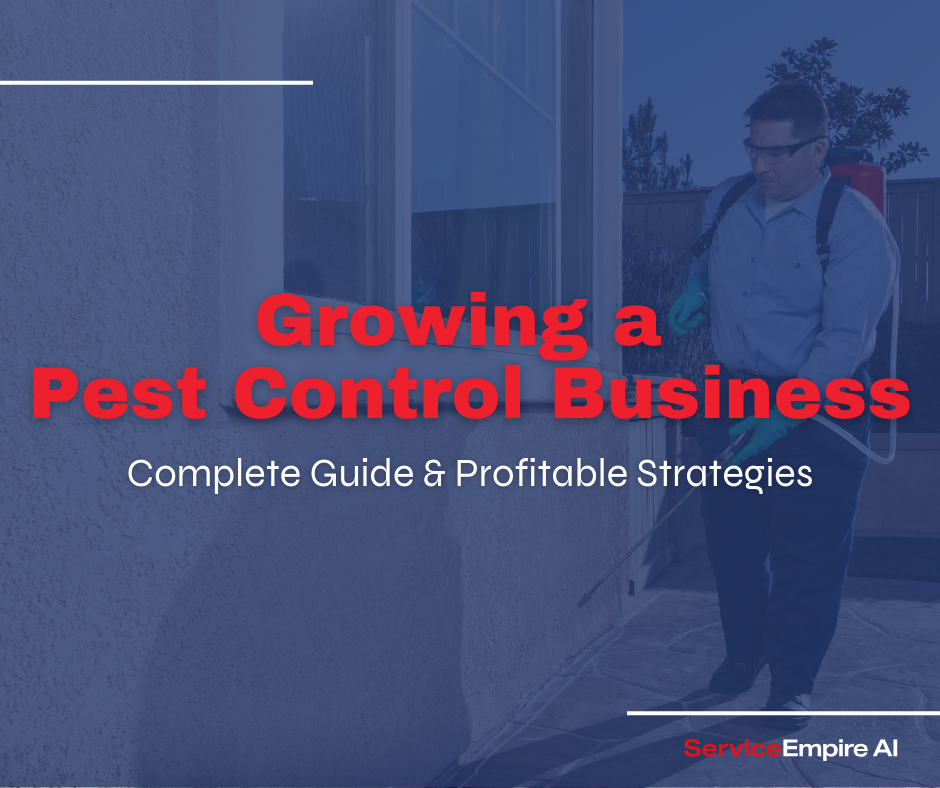
The pest control industry continues to grow and is expected to keep rising through 2034. More specifics on these stats in a minute. This steady demand makes starting a pest control business a smart choice, even during economic downturns, since homes and businesses always need pest solutions for health and safety.
There are many ways to specialize in pest control, from termite treatment and bed bug removal to eco-friendly and wildlife options. Whether you're a technician ready to run your own business or an entrepreneur looking for a solid industry, this guide will show you how to start and grow a successful pest control company.
Pest Control Industry Overview
The pest control industry continues to demonstrate strong growth potential, driven by several key factors that ensure ongoing demand for professional services.
Market Size and Growth Projections
The U.S. pest control services market reached $20.1 billion in 2019, with projections indicating growth to over $44 billion by 2034. This consistent expansion outpaces many other service industries and reflects the essential nature of pest management services. According to the National Pest Management Association (NPMA), approximately 49% of U.S. households have hired a licensed professional to conduct a termite inspection on their home. Of course, commercial clients, especially restaurants and professional buildings, never want to see a pest at their place of business.
Industry Trends Driving Demand
There are some trends fueling industry growth:
- Climate Change: Warming temperatures are expanding the range and breeding seasons of many pest species, creating year-round demand in previously seasonal markets.
- Urbanization: Increasing population density creates ideal conditions for pest proliferation, particularly for rodents, cockroaches, and bed bugs.
- Regulatory Pressure: Stricter health codes and safety regulations, especially in commercial food service, healthcare, and hospitality sectors, mandate regular pest management.
- Public Health Concerns: Growing awareness of pest-borne diseases has elevated pest control from a convenience to a health necessity.
Seasonal Patterns
The pest control industry experiences predictable seasonal fluctuations:
- Spring/Summer: Peak demand for general pest control, ants, mosquitoes, and stinging insects
- Fall: Increased rodent and overwintering pest control needs
- Winter: Reduced outdoor services but continued commercial contracts and indoor pest management
Successful pest control businesses develop service offerings that balance these seasonal shifts to maintain consistent revenue throughout the year.
Market Segments
The industry serves two primary markets:
Residential
- Represents approximately 62% of the market
- Services include one-time treatments and recurring maintenance programs
- Typically higher margins but more sensitive to economic fluctuations
Commercial
- Comprises about 38% of the market but often represents higher-value contracts
- Includes restaurants, hotels, healthcare facilities, warehouses, and office buildings
- Features more stable recurring revenue but requires specialized knowledge and compliance expertise
Business Models
Entrepreneurs entering the pest control industry typically choose between:
Independent Operations
- Lower initial investment ($10,000-$80,000)
- Complete control over business decisions and service offerings
- Higher profit potential but slower initial growth
- Responsibility for developing systems and marketing
Franchise Opportunities
- Higher startup costs ($75,000-$150,000+)
- Established brand recognition and proven systems
- Training and operational support
- Ongoing royalty fees (typically 6-10% of revenue)
Essential Pest Control Equipment and Supplies
The right equipment not only allows for better service delivery but also projects professionalism to clients.
Basic Equipment for New Businesses
Every pest control operation requires these fundamental tools:
- Backpack or truck-mounted sprayers: $200-$1,500 each
- Hand sprayers and dusters: $50-$300 each
- Flashlights and inspection tools: $100-$300
- Bait guns and applicators: $50-$200
- Basic hand tools: $200-$400
- Ladders and extension poles: $200-$500
- Measuring devices: $50-$150
- Digital camera (for documentation): $200-$500 or smartphone
- Basic rodent control equipment: $300-$600
Specialized Equipment by Pest Type
Additional equipment needs vary by service specialization:
Termite Control
- Termite inspection tools: $200-$500
- Drilling equipment for treatment: $500-$1,200
- Foam application systems: $300-$800
- Moisture meters: $100-$400
Bed Bug Treatment
- Heat treatment equipment: $10,000-$30,000 (or rental options)
- Steam machines: $300-$1,500
- UV detection lights: $50-$300
- Mattress encasements: $30-$60 each
Wildlife Control
- Live traps (various sizes): $500-$1,500
- Exclusion materials: $300-$800
- Animal handling equipment: $200-$500
- Specialized removal tools: $300-$700
Personal Protective Equipment
Safety equipment is non-negotiable and includes:
- Chemical-resistant gloves: $10-$30 per pair
- Respirators and filters: $50-$150
- Protective eyewear: $10-$50
- Coveralls or uniforms: $40-$80 per set
- Chemical-resistant footwear: $50-$150
Vehicle Requirements and Setup
Your service vehicle represents your business and functions as a mobile workspace:
- Cargo van or truck with storage system: $25,000-$45,000 (new)
- Vehicle storage organization: $500-$2,000
- Vehicle graphics/wrapping: $1,500-$3,000
- Secure chemical storage: $300-$800
- GPS and routing systems: $300-$1,000 plus monthly subscription
Product Inventory Management
Effective inventory systems include:
- Secure pesticide storage cabinets: $200-$800
- Inventory management software: $20-$100 monthly
- Secondary containment systems: $100-$300
- Safety data sheet organization: $50-$200
- Temperature-controlled storage: $200-$800
Pest Control Certifications and Training
Professional credentials not only meet legal requirements but also build customer trust and enhance your service quality.
Required Technical Certifications
Most states require these fundamental certifications:
- Commercial Pesticide Applicator License: Required in all states for applying pesticides professionally
- Category-Specific Certifications: Separate endorsements for general pest control, termites, fumigation, etc.
- Business License: Company registration with appropriate state regulatory agency
The certification process typically involves:
- Required pre-certification training (varies by state)
- Written examination covering laws, safety, application methods, and pest identification
- Practical demonstration in some states
- Application fee payment ($100-$600 depending on state and categories)
- Regular renewal (typically 1-5 years)
Additional Credentials for Specializations
Advanced certifications increase credibility and service capabilities:
- Termite Inspector/Technician: Specialized training for wood-destroying organism inspections
- Bed Bug Specialist: Certification in advanced bed bug treatment methods
- Wildlife Control Operator: State permits for handling and removing wildlife
- Fumigation Specialist: Advanced certification for fumigation services
- Green/IPM Specialist: Certification in reduced-risk pest management approaches
Continuing Education Requirements
Most states mandate ongoing education to maintain licensing:
- Typical requirement: 6-20 continuing education units (CEUs) per renewal period
- Industry conferences and seminars
- Manufacturer and distributor training programs
- Online courses and webinars
- Subscriptions to industry publications
Industry Associations and Memberships
Professional organization membership provides valuable resources:
- National Pest Management Association (NPMA): Industry advocacy, resources, and networking
- State Pest Control Associations: Local regulations, training, and business development
- Specialty Organizations: Groups focused on specific pests or methods (urban wildlife, bed bugs, etc.)
- Business Development Groups: General business improvement organizations
Membership typically costs $200-$800 annually but provides access to training resources, industry updates, and professional networks that can significantly accelerate business growth.
Developing Your Service Offerings
Creating well-structured service packages allows for clearer marketing, consistent pricing, and improved operational efficiency.
Core Residential Pest Control Services
Standard residential offerings typically include:
- One-Time General Pest Control: Single treatments targeting active pest issues
- Quarterly Pest Protection Plans: Regular preventative service addressing seasonal pests
- Monthly Service Programs: More frequent service for areas with high pest pressure
- Initial Service + Maintenance: Comprehensive initial treatment followed by regular maintenance
Commercial Pest Management Programs
Commercial services require a different approach:
- Customized Service Schedules: Based on facility type, regulations, and pest pressure
- Integrated Pest Management (IPM): Systematic approach focusing on prevention and monitoring
- Compliance-Focused Programs: Documentation and service designed to meet health codes and audits
- Employee Training Components: Staff education to support pest prevention efforts
Specialty Services
High-margin specialty services include:
- Termite Inspections and Treatments: Pre-treatment, baiting systems, and liquid applications
- Bed Bug Remediation: Inspection, treatment, and follow-up verification
- Wildlife Removal and Exclusion: Humane removal and preventative sealing of entry points
- Mosquito and Tick Control: Seasonal outdoor pest management programs
- Rodent Exclusion: Comprehensive sealing and prevention systems
Service Agreement Structures
Develop clear service terms and conditions:
- Contract Length Options: Month-to-month, annual, or multi-year agreements
- Service Guarantees: Retreatment policies and performance guarantees
- Cancellation Terms: Clear policies for both customer and company-initiated termination
- Payment Options: Pre-payment discounts, monthly billing, or automatic payments
Eco-Friendly Service Options
Meet growing demand for reduced-chemical approaches:
- Green Service Programs: Using botanically-derived or reduced-risk products
- Exclusion-Focused Services: Emphasizing pest-proofing over chemical applications
- Monitoring Programs: Regular inspection with treatment only as needed
- Integrated Pest Management (IPM): Comprehensive approach using multiple tactics
Pricing Strategies for Pest Control Services
Effective pricing strategies balance profitability with market competitiveness while reflecting service value.
Cost-Based Pricing Fundamentals
Calculate your service costs accurately:
- Direct Costs: Labor, materials, vehicle expenses
- Indirect Costs: Insurance, office expenses, marketing
- Profit Margin: Typically 20-40% depending on service type
- Overhead Allocation: Distributing fixed costs across service volume
For example, a basic residential service might break down as:
- Technician time (1 hour): $25
- Materials: $15
- Vehicle costs: $10
- Overhead allocation: $30
- Target profit (30%): $34
- Total price: $114
Residential Pricing Models
Common approaches for residential services:
- Square Footage Pricing: Base prices on home size (e.g., $145 for homes up to 2,000 sq ft)
- Flat-Rate Pricing: Standardized pricing by service type regardless of size
- Tiered Package Pricing: Good/Better/Best options with increasing service levels
- Initial Service Premium: Higher first-time service fee with discounted maintenance
Commercial Contract Pricing
Commercial pricing requires more customization:
- Site-Specific Assessment: Pricing based on facility inspection
- Risk-Based Pricing: Higher rates for high-risk facilities (food processing, healthcare)
- Frequency-Based Discounting: Lower per-service rates for more frequent visits
- Compliance Premium: Additional charges for documentation and reporting requirements
Specialty Service Pricing
High-value specialized services command premium pricing:
- Termite Treatments: $800-$3,000 depending on structure size and treatment type
- Bed Bug Remediation: $500-$1,500 per room or flat-rate for whole home
- Wildlife Removal: $300-$1,500 based on species and complexity
- Mosquito Control Programs: $60-$100 per treatment or seasonal packages
- Rodent Exclusion: $800-$2,500 for comprehensive exclusion services
Strategic Pricing Considerations
Additional factors to incorporate into your pricing structure:
- Seasonal Adjustments: Premium pricing during peak demand periods
- Geographic Pricing Zones: Different rates based on travel distance
- Competitor Positioning: Strategic pricing relative to market alternatives
- Value-Added Services: Premium pricing for enhanced service features
- New Customer Acquisition Offers: Promotional pricing for first-time customers
Marketing Your Pest Control Business
Here's how to attract and convert pest control customers.
Building Your Brand Identity
Create a professional, memorable brand:
- Company Name Selection: Choose something memorable, descriptive, and available
- Logo Development: Professional design that works across applications
- Brand Colors and Typography: Consistent visual elements
- Service Vehicle Design: Professional wraps or magnets for brand visibility
- Uniformed Technicians: Professional appearance with branded attire
- Consistent Brand Voice: Messaging that reflects your service philosophy
Digital Marketing Essentials
Establish a strong online presence:
- Professional Website: Mobile-responsive design with clear service information
- Search Engine Optimization (SEO): Local keyword optimization for pest-related searches
- Google Business Profile: Optimized listing with service information and customer reviews
- Online Directories: Listings on Yelp, Angi, HomeAdvisor, and industry directories
- Content Marketing: Educational blog posts about pest prevention and identification
- Email Marketing: Regular communication with existing customers
Local Marketing Strategies
Connect with your community:
- Door Hangers/Flyers: Targeted distribution in neighborhoods with pest issues
- Direct Mail Campaigns: Seasonal promotions to targeted zip codes
- Community Involvement: Sponsorships and participation in local events
- Referral Programs: Incentives for customers to get more referrals
- Strategic Partnerships: Relationships with real estate agents, property managers, etc.
Digital Advertising
Targeted paid promotion:
- Google Local Ads: Location-based search ads for urgent pest problems
- Social Media Advertising: Targeted Facebook and Instagram ads
- Remarketing Campaigns: Follow-up advertising to website visitors
- Nextdoor Advertising: Neighborhood-focused promotion
Review Management
Build and leverage customer feedback:
- Review Generation System: Process for requesting reviews after service
- Review Response Protocol: Professional responses to both positive and negative reviews
- Review Monitoring: Regular checking of review platforms
- Review Promotion: Highlighting positive reviews in marketing materials
Conclusion
Starting a pest control business offers promising opportunities for entrepreneurs willing to navigate the necessary regulatory, operational, and marketing challenges. The industry's consistent growth, driven by increasing urbanization, climate change, and public health awareness, provides a stable foundation for business success. By focusing on proper licensing, thorough training, quality equipment, strategic service development, and effective marketing, new pest control operators can establish profitable businesses with strong growth potential.
The key to long-term success lies in balancing technical excellence with business fundamentals. Providing exceptional service quality, maintaining regulatory compliance, and building strong customer relationships create the foundation for sustainable growth. As your pest control business expands, continuing education, adaptation to emerging trends, and operational refinement will ensure continued relevance and profitability in this essential service industry.
Remember that pest control is ultimately about providing peace of mind and protection for your customers' homes and businesses. By maintaining this customer-focused perspective throughout your business operations, you'll build a reputation that drives referrals and sustains long-term growth in your pest control business.
FAQ Section
How much does it cost to start a pest control business?
Starting an independent pest control business typically costs between $10,000 and $80,000, depending on your service scope and scale. Key expenses include vehicles ($8,000-$45,000), equipment ($2,500-$12,000), licensing/insurance ($1,500-$4,000), and initial marketing ($4,500-$14,000). Starting as a one-person operation focusing on general pest control represents the lower investment range, while multi-technician operations with specialty services require higher initial funding.
Do I need special licenses to start a pest control business?
Yes, pest control businesses require specific licensing in all 50 states. Requirements typically include:
- Commercial pesticide applicator licensing for owners and technicians
- Business registration with state pest control regulatory boards
- Category-specific certifications based on your service offerings (general pest, termite, fumigation)
- Regular continuing education to maintain licensure
- Additional local business permits and registrations
How much can a pest control business make annually?
Annual revenue for pest control businesses varies widely:
- Solo operators: $75,000-$150,000
- Small companies (2-5 technicians): $200,000-$500,000
- Mid-sized operations (6-15 technicians): $500,000-$1.5 million
Profit margins typically range from 15-45% depending on service mix, efficiency, and business model. Recurring service contracts, specialty services, and commercial accounts generally yield higher profit margins than one-time residential treatments.
Should I buy a pest control franchise or start independently?
This decision depends on your experience, resources, and goals:
Franchise Advantages:
- Established brand and systems
- Training and ongoing support
- Proven marketing strategies
- Faster initial growth potential
Independent Advantages:
- Lower startup costs
- No royalty fees (typically 6-10% of revenue)
- Complete operational freedom
- Higher long-term profit potential
If you have pest control experience but limited business background, a franchise may provide valuable structure. With strong business skills and industry knowledge, an independent operation offers greater flexibility and profit potential.
Stop Wasting Time on Plans That Never Get Executed